
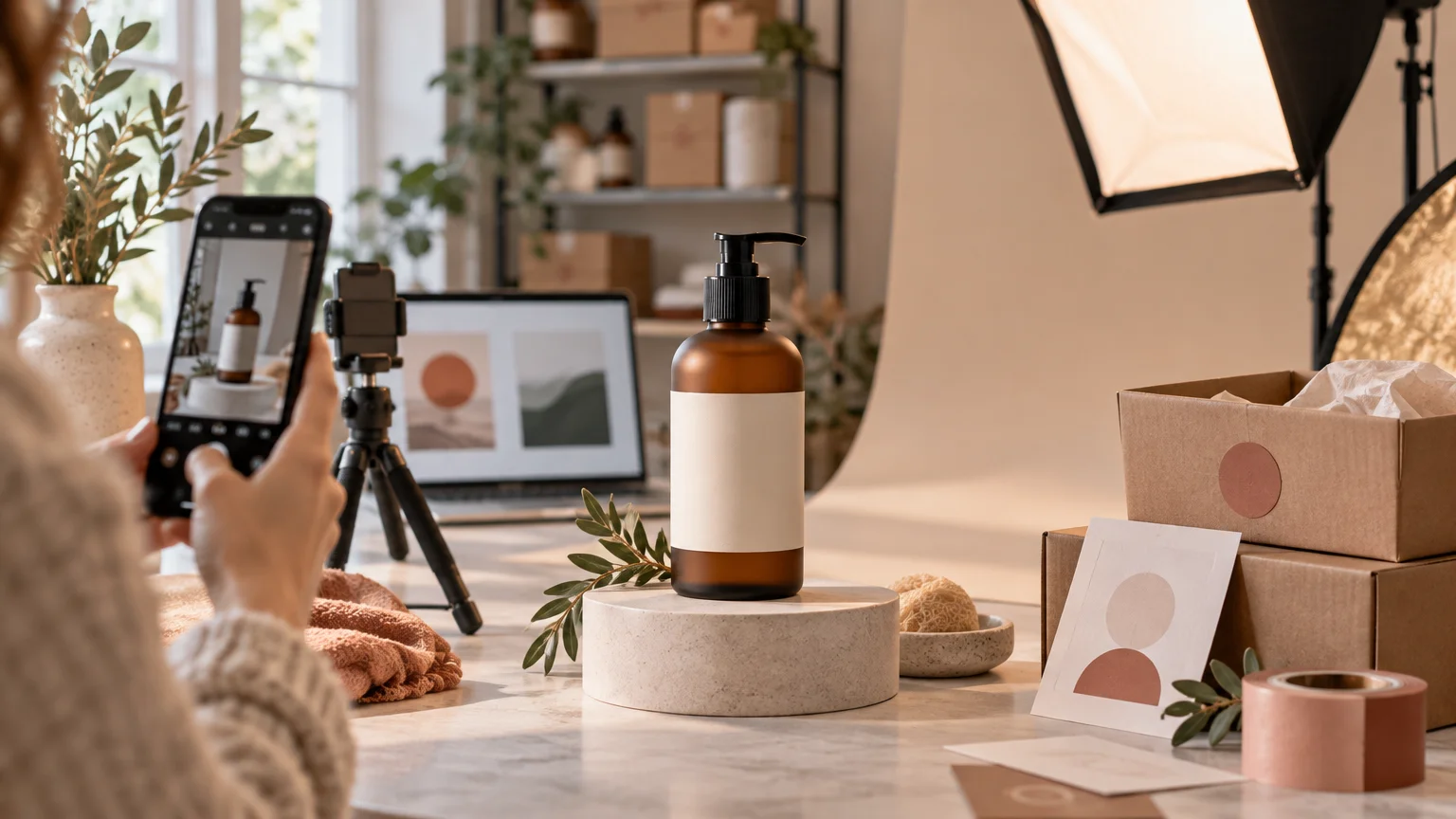
TLDR: The UGC vs studio ads ecommerce decision should not produce one permanent winner. Creator-led ads are useful for relatable hooks, customer language, objections, and rapid variation. Studio ads are useful for controlled demonstrations, product detail, premium visual cues, and reusable assets. Test creator-led, studio-led, and hybrid executions with the same product, offer, audience, landing page, and commercial objective.
The most useful way to approach UGC vs studio ads ecommerce creative is to stop treating it as an authenticity contest. The real question is what proof a shopper needs next. Does the ad need to make the problem feel familiar, show precisely how a product works, support a premium price, or answer an objection before the click? Assign the format to that job.
A creator talking naturally into a phone can make an unfamiliar product feel relevant. A controlled studio sequence can make its materials, dimensions, finish, mechanism, or included components easier to understand. A hybrid can do both in 20 seconds. That is why a small portfolio of formats is usually a more useful starting point than one expensive bet on a creative style.
First, define what kind of ad you are comparing
“UGC” is often used as a catch-all, but the label can hide meaningful differences in ownership, permissions, and audience expectations.
- Customer UGC is content voluntarily created by an actual customer. Permission is still required before a brand repurposes it in advertising.
- Paid creator content is commissioned from a creator. It may look informal and experience-led, but it is commercial content rather than spontaneous customer praise.
- Creator-authorized advertising uses content or an identity that a creator authorizes for paid distribution. TikTok describes Spark Ads as a way to use posts from a linked brand account or creator posts authorized for advertising use.
- Studio-produced creative is planned and captured under controlled lighting, styling, audio, and art direction. It can include people, testimonials, demonstrations, animation, or creator footage; “studio” does not have to mean glossy or impersonal.
- Hybrid creative combines creator-led context with controlled product footage, graphics, demonstrations, or offer frames. This is often the most practical middle ground.
These distinctions matter operationally. A customer clip, commissioned creator video, and creator-authorized ad may look similar in a feed, but they do not carry the same contracts, edit rights, disclosure requirements, or authorization workflow.
UGC vs studio ads for ecommerce at a glance
| Decision factor | Creator-led or UGC-style | Studio-produced | Hybrid |
|---|---|---|---|
| Iteration speed | Usually suited to producing multiple hooks and scripts quickly | More planning, setup, and post-production may be required | Reuses controlled product footage across changing creator hooks |
| Platform-native feel | Can resemble surrounding creator content | Depends heavily on framing, pacing, and editing | Keeps a personal opening while improving product clarity |
| Product detail | Variable; depends on the creator brief and capture quality | Strong control over close-ups, scale, lighting, and sequencing | Creator explains the need; studio footage proves the details |
| Brand control | Lower unless the brief and approval process are tight | High control over visuals, language, and composition | Controlled proof without making every moment feel scripted |
| Social proof | Can convey personal context and experience | Must be deliberately built through testimonials or evidence | Combines personal context with verified product facts |
| Premium positioning | Works when creators and environments fit the brand | Useful for consistent materials, finish, and art direction | Relatability can coexist with premium product presentation |
| Reuse | Rights and creator likeness may limit reuse | Often adaptable to product pages, email, retail, and catalogs | Creates both modular product footage and channel-native variants |
| Operational risk | Rights, disclosures, claims, and inconsistent footage | Production cost and slow iteration can become constraints | More moving parts, but less dependence on one asset type |
None of these characteristics guarantees performance. A polished ad can be clear and persuasive; it can also feel detached from the feed. A creator ad can feel immediate and credible; it can also be vague, over-scripted, or visually confusing. Execution and message-market fit matter more than the label.
When creator-led ads earn their place
Creator-led ads are especially useful when the first challenge is recognition. The viewer should quickly think, “That is my problem,” “I use it that way too,” or “I did not know there was a product for that.” A creator can surface the language customers naturally use instead of forcing the product into internal brand terminology.
Good creator briefs explore distinct reasons to care rather than requesting ten nearly identical testimonials. Useful angles include an unexpected use case, a before-and-after routine, a common objection, a comparison with the old workaround, an unboxing, or a demonstration in the environment where the product is actually used.
This format also supports fast hook testing. One product demonstration can be introduced through convenience, frustration, gifting, aesthetics, durability, or time saved. TikTok’s business guidance emphasizes native short-form creative, testing, and creator collaboration as relevant advertising approaches. TikTok’s creative advertising guidance
Native does not mean careless. The product must remain visible and understandable, and the creator’s claim must match what the brand can substantiate. A relatable delivery cannot rescue a weak offer or an unclear landing page.
When studio ads justify the added planning
Studio production becomes valuable when the product itself needs controlled proof. Consider a beauty product where texture and application matter, a modular item with several configurations, a bag with hidden compartments, or a home product whose dimensions are difficult to judge. Close-ups, measured comparisons, labels, and deliberate sequencing can reduce uncertainty faster than a talking-head endorsement.
Studio assets also work harder across the ecommerce system. The same footage may support paid social, product-page modules, launch email, marketplace listings, retailer presentations, and post-purchase education. That reuse can make a planned shoot economical even when a casual creator clip costs less initially.
Premium brands do not need to avoid creator content, but they should control the context. Select creators whose setting, language, and presentation fit the intended customer. Then cut from their personal setup into crisp footage of the finish, construction, packaging, or mechanism. Premium positioning is weakened by imprecise proof more often than by the presence of a real person.
The strongest hybrid follows hook, proof, and action
A practical hybrid ad can begin with a creator naming the situation, move into controlled footage that demonstrates the product, and return to the creator for an outcome or recommendation. The offer and next step then receive their own clear frame.
- Hook: Name the specific situation or frustration in the customer’s language.
- Context: Show where the product fits into the routine.
- Proof: Use controlled footage to demonstrate the mechanism, material, size, application, or included components.
- Objection handling: Address the strongest credible concern, such as setup, compatibility, care, or storage.
- Action: Present the offer and next step without introducing a different promise from the one made at the opening.
Meta reports that, in its cited Reels testing, 9:16 video with audio and important visual elements kept within safe zones produced a lower cost per result than image-led Reels campaigns. Meta also reports improved average results in its cited test set when partner-enabled native Reels creative was added to business-as-usual activity. These are platform-reported findings, not proof that every creator ad will beat every studio ad.
Whatever wins the click must continue after it. If the ad promises a fast comparison, unusual use case, or specific bundle, the landing page should repeat that promise and supply the next layer of proof. A useful companion is this guide to converting product pages for TikTok traffic.
Run a fair three-format creative test
Start with one SKU, one audience problem, and one offer. Build three executions from the same strategic brief: creator-led, studio-led, and hybrid. The goal is not to make every frame identical. It is to keep the commercial proposition stable enough that format and execution are the main differences.
- Write one shared claim sheet covering approved product facts, the offer, prohibited language, and required qualifications.
- Choose one core angle, such as easier storage or faster setup, rather than giving each format a completely different promise.
- Produce multiple openings for each format. A single weak hook should not decide the fate of an entire production model.
- Keep the audience, campaign objective, optimization event, attribution setting, landing page, offer, and test window as stable as practical.
- Give each variation enough delivery to produce decision-useful results. Avoid declaring a winner from a handful of clicks or one early purchase.
- Record the reusable lesson: hook, objection, demonstration, proof point, creator profile, offer, and landing-page match.
Do not choose solely on click-through rate. A provocative creator hook may attract inexpensive curiosity without producing qualified buyers. A product-focused studio ad may earn fewer clicks but send visitors who understand the item and convert at a higher rate.
Read the test in commercial sequence
- Attention: Did the opening retain enough viewers to communicate the product and proposition?
- Traffic quality: Did visitors engage with the relevant product details rather than leave immediately?
- Conversion: Did the sessions produce add-to-cart activity, checkout progression, and purchases?
- Economics: What were purchase CPA and contribution margin after media, discounts, product cost, payment costs, and variable fulfillment expense?
- Durability: Can the winning concept be refreshed with new openings, creators, demonstrations, or offers without rebuilding everything?
- Incrementality: For retargeting-heavy campaigns, consider whether the platform is claiming demand that already existed. Incrementality testing for ecommerce retargeting explains why dashboard efficiency can overstate commercial impact.
The winning unit is often not an entire video. It may be a hook from the creator version, a demonstration from the studio version, and an objection answer discovered in comments. Treat the test as a way to build a modular creative library rather than crown one permanent aesthetic.
Secure rights, disclosures, and claims before launch
Creator content becomes an operational liability when the team waits until launch day to discuss permissions. Define the scope before production begins.
- Paid-media usage period, territories, platforms, and whether renewal requires another fee
- Permission to use the creator’s name, voice, image, handle, and likeness
- Editing rights, including cutdowns, captions, recombination, localization, and use with other footage
- Delivery of raw files and whether the brand may reuse them outside paid social
- Authorization steps and duration for Spark Ads or other creator-partnership formats
- Responsibility for music, footage, logos, locations, and other third-party rights
- Required disclosure language and where it must appear
- Approved product claims, mandatory qualifications, and a process for reviewing new scripts or edits
The U.S. Federal Trade Commission says material connections between brands and endorsers should be clearly disclosed, including payment or free products. It also says endorsements should reflect honest opinions or experiences and cannot make claims the advertiser could not substantiate directly. For video, the FTC advises putting the disclosure in the video rather than relying only on the description; when a video uses both sight and sound, disclosure in both formats is more likely to be noticed. Review the FTC’s social media disclosure guidance as part of the briefing process.
Platform authorization and advertising compliance are separate checks. Permission to promote a creator’s post does not automatically settle usage rights, music rights, disclosure, or product-claim approval.
Turn winning ad lessons into a broader conversion system
Paid-social learning should not remain trapped in the ad account. Move validated language onto the product page, use proven objections in retargeting and email, and add strong demonstrations to product education. Creator codes can support campaign operations, but a redemption does not by itself reveal which touchpoint caused a purchase; use them alongside links and a defined attribution process. This creator-code attribution framework covers that distinction.
Post-purchase touchpoints can extend the same concept. A brand might place custom QR stickers on an insert that sends customers to setup instructions, a replenishment flow, or a page inviting an honest review. The destination should be useful, mobile-friendly, and maintained; a QR code pointing to an abandoned campaign page adds friction rather than value.
Start with a small hybrid batch, not a format ideology
For most ecommerce teams, the practical next move is a controlled batch: several creator hooks, one strong set of studio product demonstrations, and a few hybrid edits combining the best of both. Test them against the same commercial job, then judge the result through conversion quality and contribution margin—not visual preference or click-through rate alone.
Preserve every useful learning in a library of hooks, objections, demonstrations, claims, offers, and audience contexts. Over time, that library becomes more valuable than the UGC-versus-studio debate because it tells the team what proof customers need and how to deliver it efficiently.